
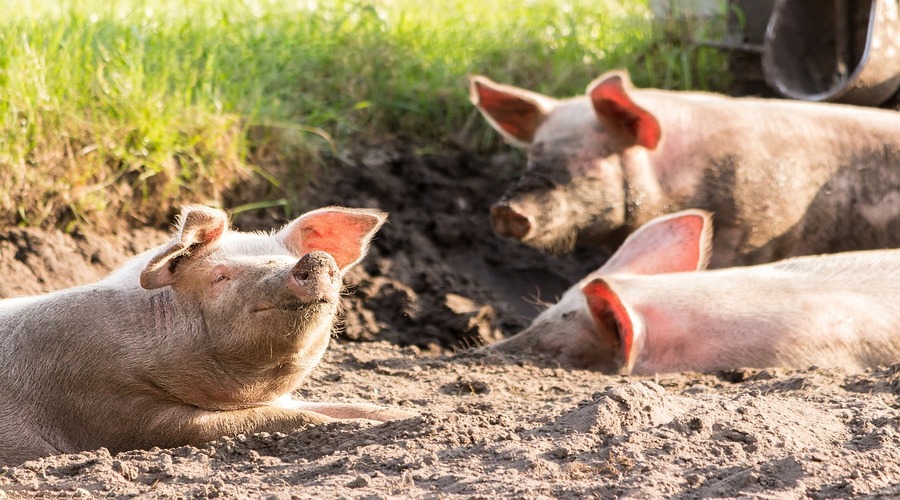
The final destination of effluent from pig farms has been a matter of debate in the country, as it often ends up in waterways and degrades freshwater ecosystems. Their evaluation is the most appropriate solution, because in addition to promoting a circular economy, it ensures that they are not disposed of into the environment without any kind of treatment.
School of Biotechnology of the Catholic University of Porto and the company pipe masters They’ve come together to create a new technology, Freetilizer, that treats and uses effluent from pig farms, resulting in organic compost.
“By enzymatic hydrolysis of organic waste and by-products, Freetilizer allows nutrients to be recovered. In this way, it is possible to take advantage of the current cost and turn it into a benefit for organizations, from a circular economy perspective and reduce the environmental impact of the waste,” explains Miguel Ramos of Pipe Masters. “The developed process takes only 24 hours, compared, for example, to the composting process that takes months.”
Ana Teixeira Oliveira, a researcher at the Center for Biotechnology and Microchemistry (CBQF) at the Catholic School of Biotechnology in Porto, notes that “the studies that have been conducted, which included assessment of the potential of a fertilizer and phytotoxicity and performance tests using a plant model to assess the quality and safety of the developed product,” He concluded that “the compost produced by this technology is rich in nutrients and has an enhanced effect on plant growth.” In addition, the researcher adds, “The microbiological characterization of the product ensures its safety for use in food production and for the environment.”
Freetilizer technology “is applied as a potential treatment and recovery of effluents from pig farms, after testing it on effluents from farms in the Leiria region, and estimating the various components of aqueous waste that allows, after centrifugation, to separate it and obtain a liquid part and a solid part. The solid part is subsequently processed In an industrial reactor through a process of enzymatic hydrolysis, which allows the organic matter to be converted from the solid phase to more bioavailable compounds, thus obtaining organic fertilizer.The liquid fraction will be concentrated using a vacuum system allowing efficient drying with low energy consumption, resulting in a compost Liquid organic,” explains Miguel Ramos.

Andrea Hargraves is a contributor to Brytfmonline.com, covering a broad range of topics including news, politics, business, technology, sports, entertainment, and lifestyle. She is committed to delivering clear, accurate, and reader-focused reporting that helps audiences stay informed about current events and emerging developments. Andrea’s work emphasizes useful information, balanced coverage, and stories that matter to everyday readers, making complex topics accessible and relevant to a wide audience.