
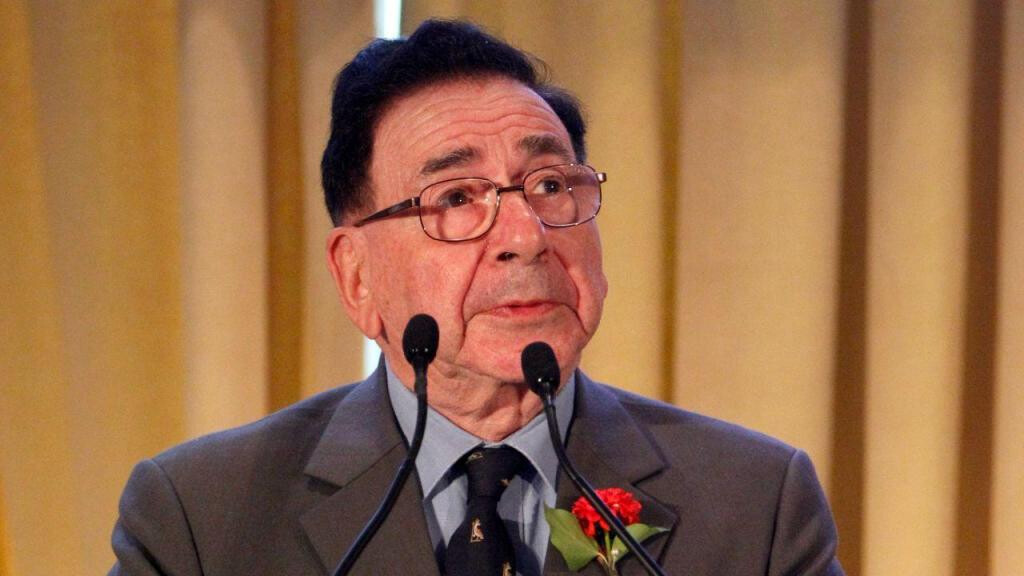
British surgeon Roy Calne, who performed the first liver transplant in Europe in 1968, died on Saturday at the age of 93, his family said.
The family said in a statement that the surgeon and honorary professor at the University of Cambridge, born in 1930, died of heart failure on Saturday night in Cambridge, southeast England.
According to his son Russell, who told the BBC, Roy Calne had an “amazing, slightly eccentric” personality and was a “wonderful father of six” who were “very proud” of him.
The specialist performed the first liver transplant in Europe, performed at Addenbrooke's Hospital, in Cambridge, on May 2, 1968, for a 46-year-old woman who developed liver cancer, shortly after the world's first liver transplant was performed, in the United States.
Portuguese surgeon João Rodríguez Pena was part of his team, responsible, in 1992, for the first liver transplant program in Portugal, at the Carre Cabral Hospital, in Lisbon.
Between 1967 and 1969, the Portuguese surgeon Eduardo Barroso also worked with Rui Calne at Cambridge, while holding a grant from the Gulbenkian Foundation, in the University's Department of Surgery and in the Surgical and Transplantation Service of that hospital.
Roy Calne became interested in organ transplantation in the 1950s, partly inspired by his father's work as a car mechanic, the surgeon later admitted, but at the time he was told the procedure would be impossible.
Like the American Thomas Starzl, who had performed the procedure before, the British surgeon tried to develop treatments to prevent organ rejection, because initially many patients ended up dying.
The recipient of the first liver transplant performed in Europe would die two months later from an infection caused by immunosuppressive drugs she was given to prevent organ rejection.
Since then, Calne has focused on discovering new ways to prevent organ rejection, having helped develop the innovative drug cyclosporine and been the first doctor to use it on organ transplant patients.
Anti-rejection drugs have increased the chances of survival for organ transplant patients, saving thousands of lives since they were widely used in the 1980s.
Kalne also participated in the world's first triple organ transplant (liver, lung and heart) in 1986, and in 1994 he performed a six-organ transplant: liver, kidney, stomach, duodenum, small intestine and pancreas.
In 1986, the surgeon received the title of Sir from Queen Elizabeth II.

Shirley Farmer is a contributor to Brytfmonline.com, covering a wide range of topics including news, politics, business, technology, sports, entertainment, and lifestyle. She focuses on delivering clear, balanced reporting that helps readers stay informed about current events and emerging developments. With an emphasis on accuracy, relevance, and accessibility, Shirley writes stories that provide useful information and meaningful context, making complex topics easier to understand for a broad audience.