
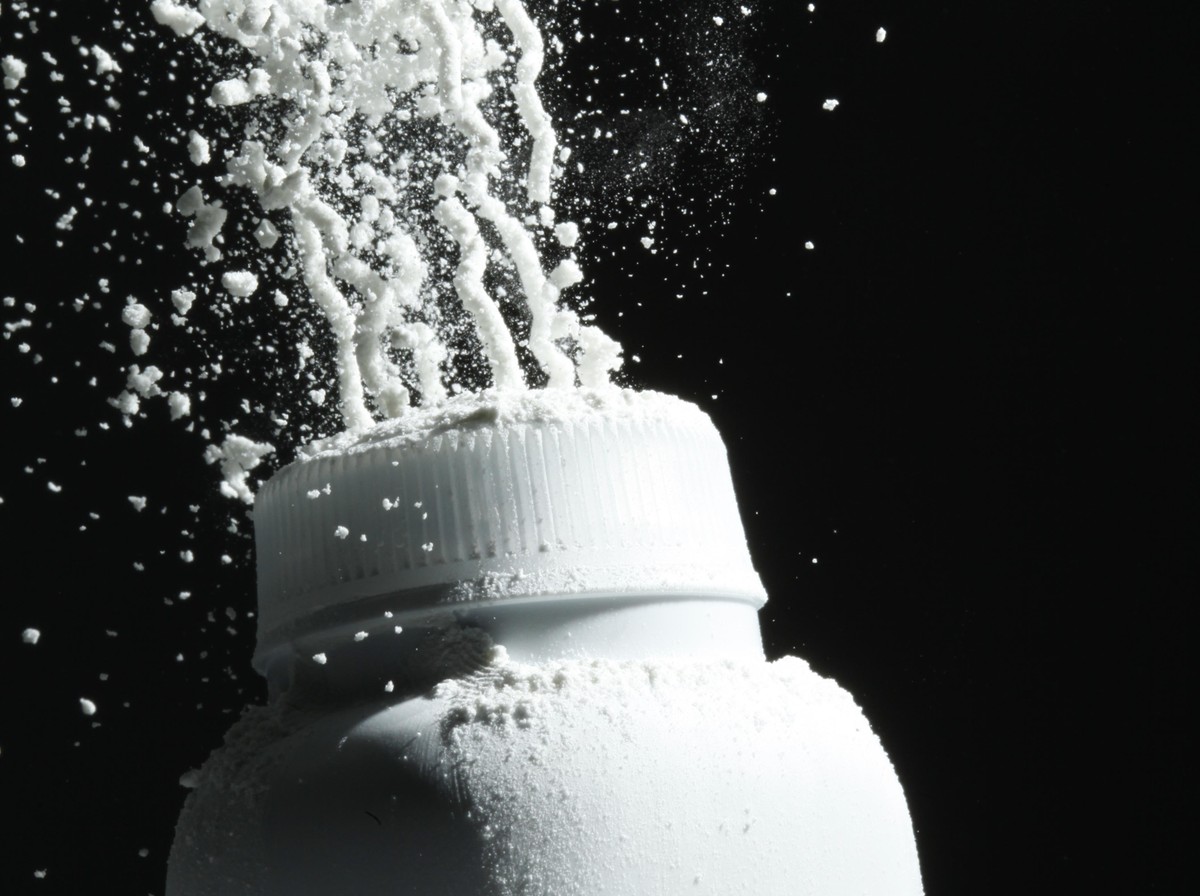
Talc is classified as: possibly carcinogenic By the World Health Organization (WHO) cancer agency, which also classified cancer as Acrylonitrile, a compound used in the production of polymers, is a carcinogen.
Experts from the International Centre for Cancer Research (CIRC/IARC), meeting in Lyon, France, published their findings on Friday (5) in The Lancet Oncology.
Talc is a natural mineral that is mined in many parts of the world. “Possibly carcinogenic” For humans, based on a combination of partial studies in humans (ovarian cancer) and sufficient evidence from laboratory animals.
According to these experts, exposure occurs mainly in the workplace during the extraction, milling or processing of talc, or during the manufacture of products containing it.
For the general population, exposure occurs primarily through the use of cosmetics and body powders containing talc.
However, experts do not rule out some biases in studies that have shown increased cancer rates.
Although the evaluation focused on talc that did not contain asbestos, It has not been possible to rule out that talc is contaminated with asbestos in most human studies.
A collection of studies, published in January 2020 and based on 250,000 women In the United States, no statistical link has been found between genital talc use and ovarian cancer risk.
In the 1970s, concerns arose about talc contamination. AsbestosWhich are often found near the minerals used in the manufacture of talc.
Later studies indicated an increased risk of ovarian cancer in talc users.
The World Health Organization also classified acrylonitrileIt is a volatile organic compound used primarily in the production of polymers, as a “carcinogen” to humans.
This decision is based on “Sufficient evidence of lung cancer” that it “limited evidence” of bladder cancer in humans, according to the International Agency for Research on Cancer.
These polymers are used to make clothing fibers, carpets, and plastics for consumer products or auto parts.
Acrylonitrile is also found in cigarette smoke. Air pollution is another source of exposure.
video: A cell phone adds up to 27 kg to your spine.
A cell phone adds up to 27 kg to your spine.

Andrea Hargraves is a contributor to Brytfmonline.com, covering a broad range of topics including news, politics, business, technology, sports, entertainment, and lifestyle. She is committed to delivering clear, accurate, and reader-focused reporting that helps audiences stay informed about current events and emerging developments. Andrea’s work emphasizes useful information, balanced coverage, and stories that matter to everyday readers, making complex topics accessible and relevant to a wide audience.