
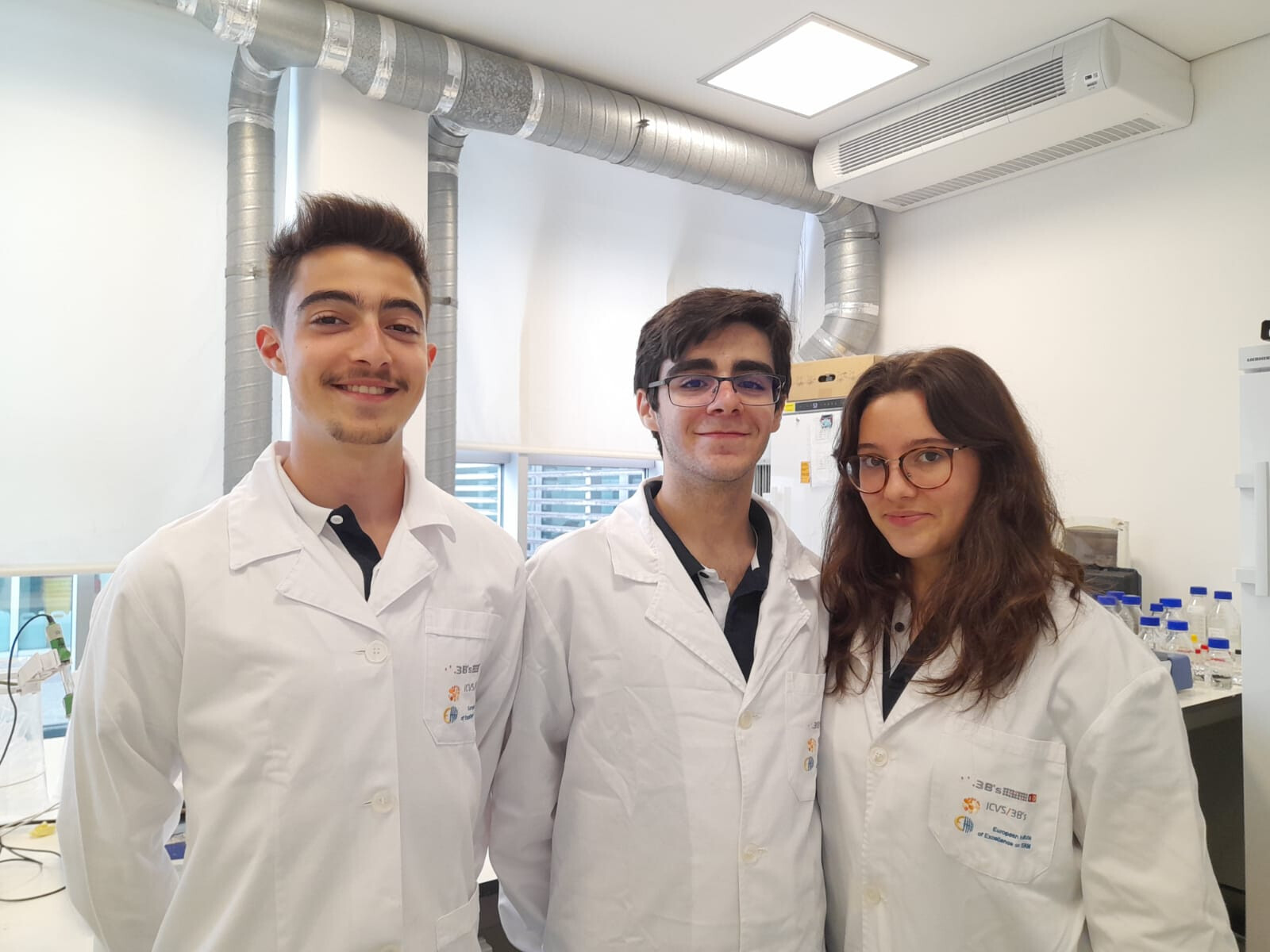
Afonso Nunes, Inés Cerqueira and Mario Onofre are the students who will take the project entitled “SpiderBacH2”, developed under the supervision of Professor Rita Rocha, to the European Union Young Scientists (EUCYS) competition. The competition continues from Wednesday to Friday next week.
The students were able to produce spider web silk with the ability to regenerate bone tissue. To do this, they inserted a genetic sequence into a common marine bacterium, Rhodovulum sulfidophilum, that allows the microorganism to design bone cells compatible with the human body. They can be used to restore weakened tissue, for example, in people with osteoporosis.
According to the students, the research makes it possible to alleviate a “global health problem”, namely osteoporosis, resulting from increased human longevity and sedentary lifestyles.
According to Inés Cerqueira, from the student group, the bacteria must be modified to produce a substance called BMP7, bone morphogenetic protein 7, which helps repair damaged bones through “stimulated” differentiation of stem cells, obtaining the product osteoblasts, which are cells of bone tissue.

Andrea Hargraves is a contributor to Brytfmonline.com, covering a broad range of topics including news, politics, business, technology, sports, entertainment, and lifestyle. She is committed to delivering clear, accurate, and reader-focused reporting that helps audiences stay informed about current events and emerging developments. Andrea’s work emphasizes useful information, balanced coverage, and stories that matter to everyday readers, making complex topics accessible and relevant to a wide audience.