
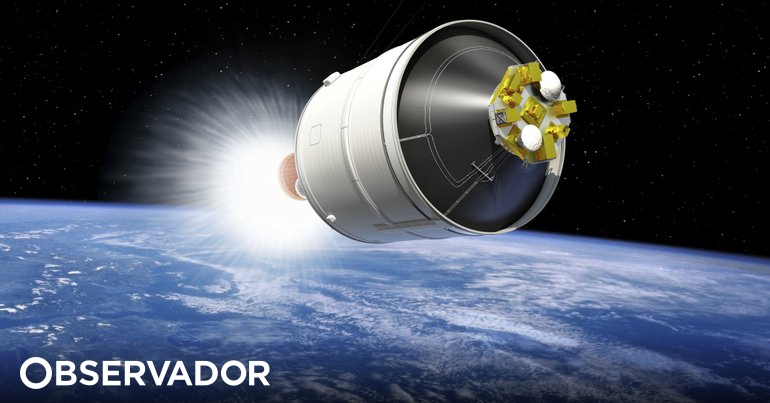
The Portuguese nanosatellite ISTSat-1, which was sent into space on Tuesday aboard the new European rocket Ariane 6, has already sent its first signals, the Higher Technical Institute (IST), which operates the device, announced on Thursday.
As IST told Lusa, the signals were received on Tuesday, “a few hours” after the nanosatellite was placed into orbit.
Europe's new Ariane 6 rocket has already launched a Portuguese nanosatellite into space
“Data regarding the presence of aircraft in remote areas will only be received in the coming weeks,” IST said in a statement, without specifying.
In an earlier note, IST said the first data would be sent about a month after operations begin.
Located 580 kilometers above Earth, above the International Space Station, is the astronauts' “home” and laboratory, ISTSat-1, built by IST students and professors. It will be used to test a new decoder for messages sent by aircraft. This will allow them to be detected in remote areas and evaluate the feasibility of using nanosatellites to receive signals about aircraft status, such as speed and altitude, for air safety purposes.
The first signals already received from the nanosatellite “are being analyzed by the IST team,” which “is trying, remotely, to understand the health status” of the device.
“The Portuguese and international community of radio amateurs has played a crucial role in the process of collecting information from the satellite,” adds the statement from the Higher Technical Institute, which receives information from ITSat-1 at the communications station operating at IST’s Oeiras Centre.
ISTSat-1, a cube that costs around 270,000 euros, is the first nanosatellite designed by a Portuguese university institution, and the third Portuguese satellite to be sent into space, after the Eros MH-1 nanosatellite, in March, and the PoSat-1 microsatellite, in 1993, which included corporate contributions.
The Técnico nanosatellite, launched as part of the European Space Agency (ESA) programme targeting university institutions, will remain in orbit for between five and 15 years before re-entering the atmosphere, but its mission will have a shorter duration.
Europe's new Ariane 6 rocket will launch on Tuesday, carrying the Portuguese nanosatellite
In addition to ISTSat-1, other small satellites and scientific equipment were sent from foreign institutions, companies and space agencies.

Chris Skeldon is a contributor to Brytfmonline.com, covering a wide range of topics including news, politics, business, technology, sports, entertainment, and lifestyle. He focuses on delivering clear, accurate, and reader-friendly reporting that helps audiences stay informed about current events and emerging developments. With an emphasis on useful information and balanced storytelling, Chris aims to provide timely coverage of issues and stories that matter most to readers.